
Helpful tips for your baby’s first swim lesson
Baby’s First Swim Lesson: Tips for a Splashing Success
Is it time for your baby’s first swim lesson? Even if you’re excited to get started, it makes sense to have a bit of anxiety, too. Fortunately, when you know what to expect, you can make the experience positive for both yourself and your little one. Here’s everything you need to know to set your baby up for a positive, safe, and memorable first swim lesson.
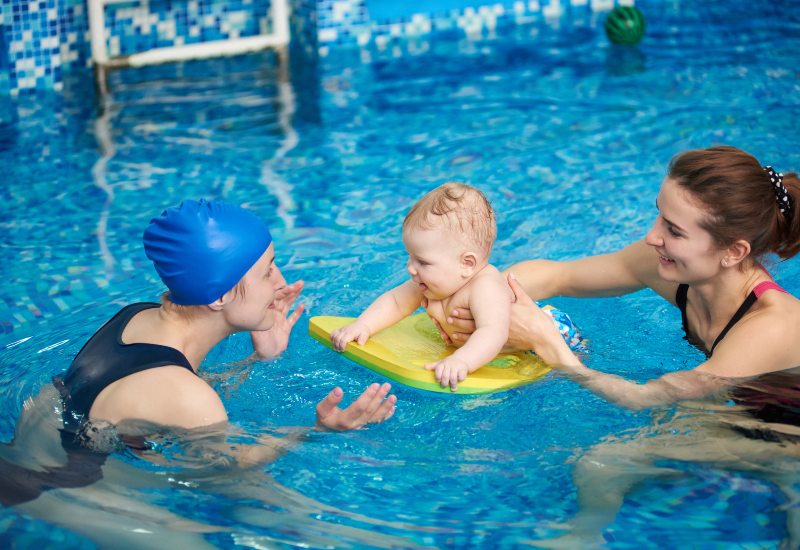
1. Know What to Expect From Baby Swim Lessons
Our baby swimming lessons start at six months of age, and classes run for 30 minutes. They focus less on “swimming” in the traditional sense and more on water familiarization. Your baby won’t be swimming laps anytime soon, and that’s perfectly okay. The goal of early lessons is to build a positive association with water and lay the foundation for water safety skills.
2. Get Your Baby Comfortable Around Water Before Class
A little preparation at home goes a long way. During bathtime, try pouring water gently over your baby’s head, blowing bubbles in the water together, and introducing simple splashing games. These small moments help your baby gain comfort with water. You could even sing songs during bathtime to help them develop those positive associations!
3. Arrive Early and Help Your Baby Settle In
Try to get to your baby’s swim lessons early. After all, walking into new place with new people for the first time can be overwhelming for both of you. Arriving 10 to 15 minutes early gives your baby time to adjust to the sights, sounds, and smells of the pool before the lesson begins.
4. Pack the Essentials the Night Before
Don’t wait until the morning of to pack for swim lessons. Take a few moments the night before to gather all of these items:
- A reusable swim diaper (We have them available at Little Otter)
- Baby swimwear
- A towel
- Change of clothes
- Snacks
5. Stay Relaxed and Keep Expectations Realistic
If you’re tense before a swim lesson, it’s likely your baby will feel it, too. Taking a few deep breaths before getting in the water, keeping your voice calm and upbeat, and smiling throughout the lesson all show your baby that this is a safe, enjoyable experience. It’s also worth releasing any pressure around performance. Some babies love the water from day one. Others cry through the first several sessions before suddenly deciding it’s the best thing ever. Neither response is wrong and consistency is key, no matter what!
6. Focus on Water Safety and Foundational Skills
While fun is the priority, water safety is the foundation everything else is built on. Infant swim classes typically introduce things like breath control, back floating, and kicking movements, all of which you can reinforce at home. At bathtime, take a few minutes to practice the skills they learned in class. Be sure to play before any soap is in the water and always supervise your child while they are in tub.
7. Make It a Fun Bonding Experience
Swimming lessons for babies are also a fun bonding experience! We recommend leaning into it. After all, you’re in the water together, making eye contact, laughing, splashing, and building trust. Your baby doesn’t care about technique yet; they just care about you being present, warm, and enthusiastic.
Set Your Baby Up to Be a Great Swimmer
Your baby’s first swim lesson is just the beginning of what will hopefully become a lifelong skill. Go in with realistic expectations, a well-packed bag, and a willingness to let your baby lead the pace. The results will be worth it! For families in Huntersville and Charlotte, NC, Little Otter Swim School is a go-to for baby swim lessons. Reach out to us for details about our programs and how you can get involved.
FAQs About Baby Swim Lessons
How Old Can Baby Swim Lessons Start?
Our baby swimming lessons are designed for children six months, and older.
What Should My Baby Wear to Swim Lessons?
A well-fitted reusable swim diaper is essential, and pair it with a snug swimsuit or wetsuit for warmth.
Is It Normal for My Baby to Cry During Swim Lessons?
Completely normal. Many babies cry during the first few lessons as they adjust to the new environment.
How Often Should My Baby Have Swim Lessons?
Once a week is the most common frequency for infant swim programs. Consistency matters more than frequency, so a regular weekly lesson is usually more effective than sporadic sessions.
Are Baby Swim Lessons Safe?
Yes. Baby swim lessons are very safe when conducted by qualified instructors like those at Little Otter Swim School.